Mexico will ask the U.S. to eliminate tariffs to ensure investment certainty

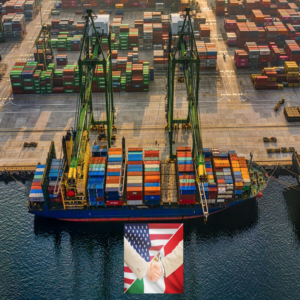
During the USMCA review working session on July 20, 2026, the Ministry of Economy (SE) will advocate for the removal of U.S. tariffs. In order to provide investors in the steel, automotive, and aluminum sectors peace of mind.
The Report on the Status of the USMCA Review Process, which the Ministry of Economy delivered to the Senate of the Republic. Details a strategy to encourage investment in aluminum, steel, semiconductors, pharmaceuticals, computing, electronics, and the automotive industry.
Citing non-trade justifications such drug trafficking and immigration control, the United States used the International Emergency Economic Powers Act (IEEPA) of 1977 to impose tariffs worldwide in April 2025. It imposed country-specific tariffs of 16 percent on average using this approach.
Despite these court decisions, the United States still raises tariffs through other legal means. Such as Sections 122 and 301 of the Trade Act of 1974, which would enable it to essentially reintroduce the duties that were suspended for all nations under the IEEPA.
Trade Expansion Act of 1962
The U.S. government has imposed tariffs under Section 232 of the Trade Expansion Act of 1962 to safeguard industries it deems strategic. Including steel, aluminum, and the automotive sector, citing national security concerns.
«These issues can be addressed through a regional strategy that strengthens production in North America and reduces dependence on imports from Asia,» according to Mexico.
Under the USMCA, Mexico expressed 13 trade concerns, including the use of the Rapid Response Labor Mechanism, state-level trade barriers, and U.S. tariff increases. This on vital industries including steel, aluminum, and the automotive sector.
He stated, «Mexico has emphasized that these measures represent significant obstacles to bilateral trade and require immediate attention to maintain the balance of the two countries’ trade relationship.»
Currently, the Mexico-U.S. bilateral agenda is structured around a protocol on the non-application of unilateral measures. The resolution of steel tariffs, the preservation of automotive competitiveness, economic security frameworks, addressing pending bilateral issues, and actions to increase investment certainty.