What exactly is the Gross Domestic Product (GDP)?
Gross Domestic Product (GDP) is the dollar worth of all products and services generated inside a country within a specified time period, usually a year. GDP is significant because it gives a snapshot that can be used to measure the size of an economy and its growth over time.
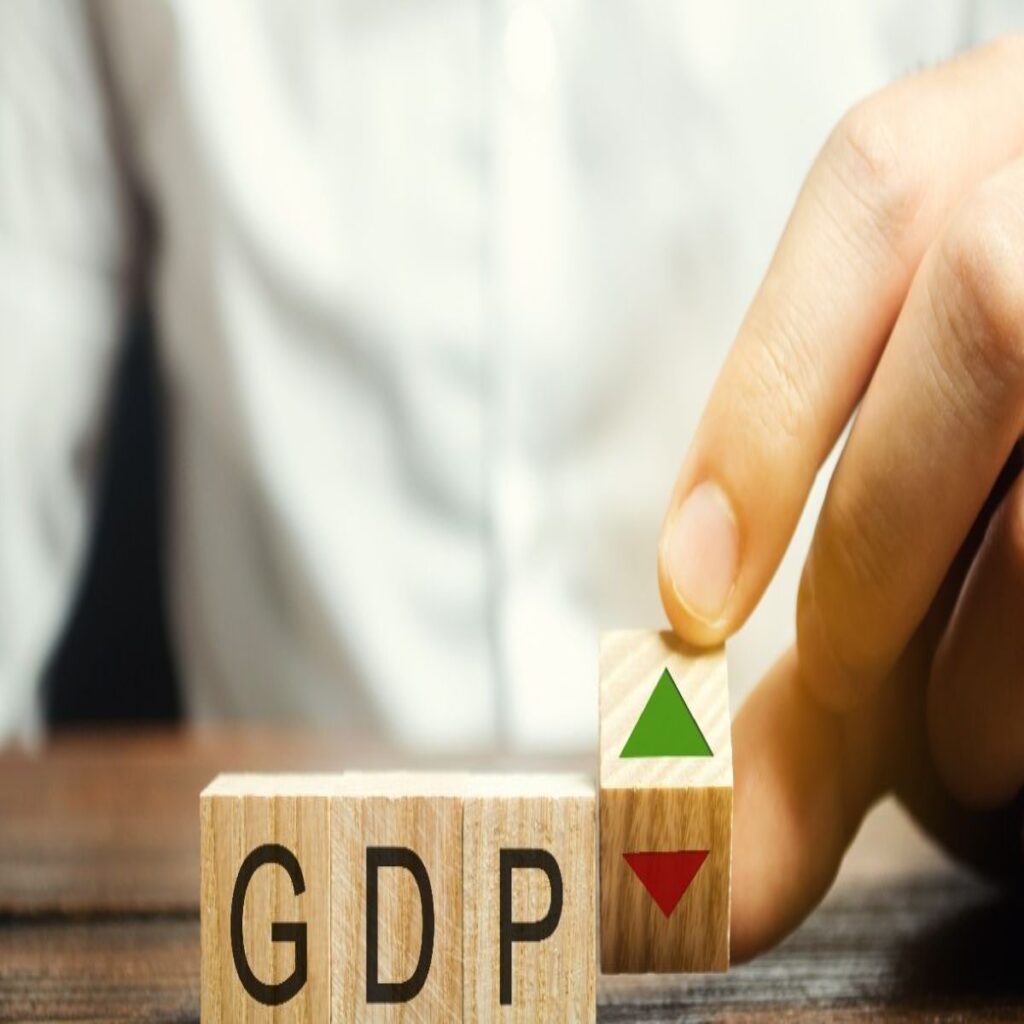
The GDP of a country is a summary of its annual income from all economic activity. Whether it is the selling of lumber for a construction project, the signing of a consulting contract, or the manufacture of car parts, all commodities and services generated within a country contribute to the GDP. When GDP increases, it indicates that the economy is functioning well. When GDP declines, the economy of a country is likely to contract. In this approach, GDP provides economists, governments, and policymakers with a meaningful indicator of economic activity and health throughout time.
Most countries strive for a GDP surplus, often known as a trade surplus. This signifies that the country produces more than it purchases. If, on the other side, a country buys more than it produces, it is said to have a trade deficit. Countries with high GDPs include the United States and China, whereas countries with low GDPs include Greenland.
Economists like to know whether the GDP data used compensates for inflation — known as real GDP — since it provides a more realistic picture for comparing and analyzing growth across time. Inflation is not taken into account when GDP is measured on a nominal basis — nominal GDP. This may appear contradictory, yet nominal GDP is really useful in certain calculations. For example, while calculating the national debt. GDP per capita, which is computed by dividing a country’s GDP by its population, is another valuable tool when analyzing a country’s economic output per person.
It’s vital to highlight that GDP ignores important elements including domestic living conditions, resource extraction, environmental effect, and unpaid domestic labor. As a result, while GDP can be used to track a country’s economic growth over time and in comparison to other countries, it does not tell the entire story.