Cybercab, Tesla’s bet on autonomous robotaxis
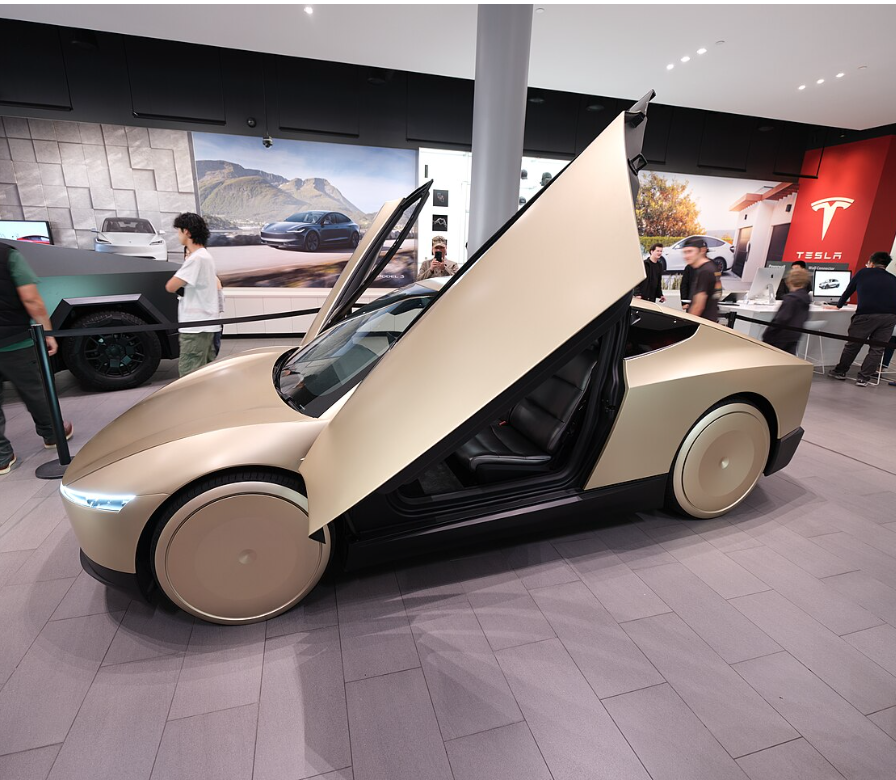
Tesla, the U.S. electric vehicle manufacturer led by billionaire Elon Musk, unveiled the Cybercab on Thursday in Austin, Texas. A vehicle designed specifically as an autonomous robotaxi with which the company plans to expand its service in the U.S.
The Cybercab is a two-seater electric car featuring upward-opening doors and lacking both a steering wheel and pedals. Relying entirely on the autonomous driving system developed by Tesla.
Prior to Thursday’s unveiling, which took place at a private event, Tesla registered 45 of these new vehicles with the Texas Department of Motor Vehicles (TxDMV). According to documentation the business submitted to the U.S. Environmental Protection Agency in May, the vehicle has a 219-horsepower electric motor with front-wheel drive, weighs 3,113 pounds (about 1,412 kilograms), and uses a lithium-ion battery.
Although this is a laboratory result rather than the final range figure that would appear on the vehicle’s commercial label. The documents mention an uncorrected combined range of 418.2 miles (about 673 kilometers).
For years, Musk has insisted to investors that autonomous driving will be a key component of Tesla’s expansion and future worth in the face of growing competition, especially from Chinese firms, in its primary electric vehicle manufacturing industry.
But Waymo, which is owned by Alphabet, the parent company of Google, is still well ahead of Tesla. Waymo opened its fully autonomous trips to the public in 2020 after launching its commercial Waymo One service in 2018.